


"There have, at all times and in all ages, been individuals who were able to heal by means of the laying on of hands, and there are such individuals among us today." — Yuri Kobrazev (Radar and Radioengineering Specialist; Member of Soviet Academy of Sciences; Director of the Soviet Union Classified Psychic Laboratory “Bioelectronics”) (Ebon, 1983)
 “Jesus Touch” in Christianity — ~100 CE (1,900 years ago)
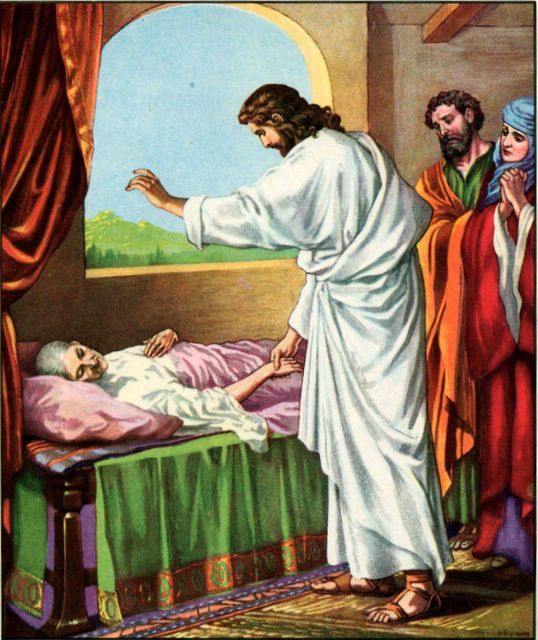
In the New Testament or the Christian Bible, specifically in the “gospels,” Jesus is frequently claimed to have healed people, simply by laying his hands on them. This is the famous, “Jesus touch” (Bible Hub).
“He laid His hands on a few sick people and healed them.” — Mark 6:5
“At sunset, the people brought to Jesus all who had various kinds of sickness, and laying his hands on each one, he healed them.” — Luke 4:40
What is their “spiritual” or “metaphysical” interpretation for this? Well, most Christians believe this works through (1) the supposed “divine nature” of Jesus, (2) or the power of the “Holy Spirit.” Oddly enough though, after Jesus’s supposed “resurrection,” he is portrayed as appearing to his followers and telling them that they too can heal through the power of touch! So perhaps this implies that according to Christianity, all can have this power.
“They will place their hands on sick people, and they will get well.” —-Mark 16:18
Despite how similar these reports are to this popular healing practice, how true the Gospel accounts is highly debated by historical scholars—who try to get to the historical truth behind these Christian scriptures, separating myth from fact. Regardless, this is still a great example of ancient belief in healing through the power of touch—and in one of the most popular religions of the world today. Not to mention, in texts written around 2,000 years ago. Could this point to the ancient roots of this healing practice? Perhaps...
 Native American “Hand-Imposing” — 1500s (600 years ago)
In the 16th century, Cabeza de Vaca, the Spanish conquistador and doctor, in his first-hand narrative, “La Relación,” (1542), similarly recalls how Native American tribes healed by “imposing of the hands.”
“They cure by blowing upon the sick, and with that breath and the imposing of hands they cast out infirmity.” — Cabeza de Vaca (16th century conquistador) (1983, p. 81)
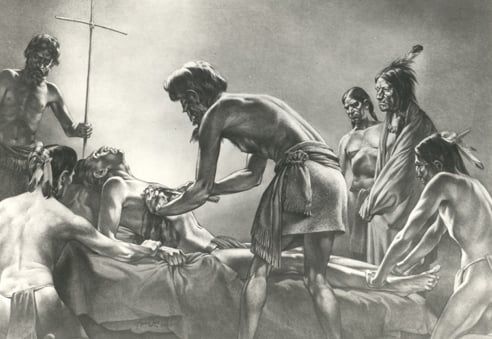
Painting, Cabeza de Vaca Performing Surgery on a Native American by Tom Lea. Courtesy of the Bullock Museum and Paul L. Foster School of Medicine, El Paso. Image available on the Internet and included in accordance with Title 17 U.S.C. Section 107. Taken from Texas State Historical Association.
But the name by which most people know of this technique is Reiki….
 “Reiki Ryoho” (霊気療法) (“Spiritual Life-Force Energy Therapy") or “Teate” (手当) (“Hands-Placing”) in Japan — 1920s
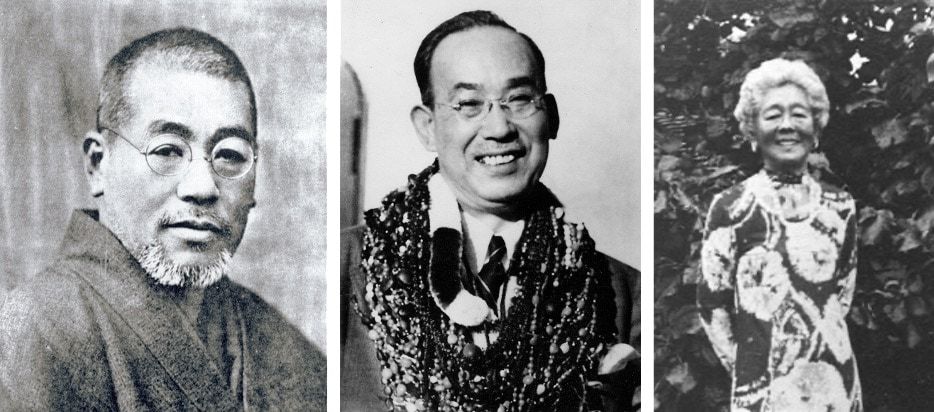
From left to right: Mikao Usui (the alleged founder of Reiki), Dr. Chujiro Hayashi (one of Usui’s students), and Hawayo Takata (one of Hayashi’s students who brought Reiki to the United States). Image from: A Brief History of Usui Reiki. Reiki Mindfulness. Accessed June 25, 2025.
In the 1920s and 30s, Japanese individuals developed a system of alternative healing which drew from Buddhist, Japanese, and Chinese religion, martial arts, and alternative healing practices. Today, it is often called “Reiki Ryoho” (Spiritual-Energy Therapy) but many people know it as “Reiki” (Spiritual Energy).
The history and evolution of Reiki is pretty convoluted, with a long lineage of teachers and students—like Mikao Usui (the alleged founder), Dr. Chujiro Hayashi (one of Usui’s students), Hawayo Takata (one of Hayashi’s students) (Rand). The system itself has also become very Westernized. For example, it wasn’t even called “Reiki” originally (it was originally referred to as “Teate,” meaning “hands-placing”) (Browen, 2006, p. 331) (International House of Reiki, 2008). That’s why I’m not attributing it to any specific teacher. Although, the most Westernized version of it likely traces back to Hawayo Takata, a Japanese-American woman who brought it to Hawaii in the 1930s (Streich, 2007). She emphasized it as a “healing method” rooted in “spiritual energy” (Reiki), and which anyone could learn and practice (Reiki Evolution, 2022).
In Japanese, “Reiki" (霊気) combines the words "rei" (霊), meaning spirit, and "ki" (気), meaning vital energy or life force (Wordhippo) (Ihreiki). So, “Reiki” is often translated as "spiritual life-force energy.” On the other hand, "Ryoho" (療法) means “therapy," “remedy,” "treatment,” or “healing method” (Wordhippo) (Nihongomaster). So, bringing these together, “Reiki Ryoho” can be translated as “Spiritual Energy Therapy,” or “Spiritual Energy Healing Method.”
•
Reiki (霊気) = Spiritual energy.
◦
Rei (霊)= Spirit.
◦
Ki (気) = Vital energy or life force.
•
Ryoho (療法) = "therapy," “remedy,” "treatment,” “healing method.”
•
Reiki Ryoho (霊気療法) = Spiritual energy healing method.
One of Reiki’s core techniques is healing and diagnosing illnesses by hovering your hands over a patient (Campion, 2018, p. 12). Lisa Campion in her popular book “The Art of Psychic Reiki,” describes how this technique looks and is experienced by both healer and patient. Below is the basic gist, but stripped of any underlying spiritual fluff. This way, we can see what physically occurs, without any underlying metaphysical interpretation.
There’s a Reiki healer and a patient in need of healing. The patient is sitting in a chair, or lying on a bed or table. The Reiki healer begins with a “self-suggestion,” like saying “Reiki-on,” as if they were commanding their system to turn on the healing energy (Campion, 2018, p. 103). They then begin by placing their hands on, or hovering above, a part of the patient's body. They may leave it there for a few minutes, then move on to the next body part.
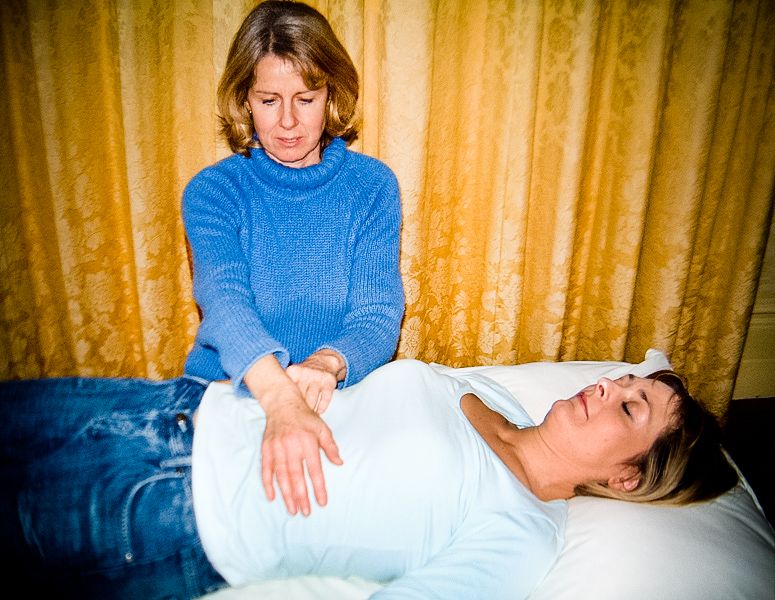
On some occasions, as they do this, the Reiki healer might even feel a “cold-spot” in a certain part of the patient's body, indicating that they need to put their hands there for healing (Campion, 2018, p. 103). Others feel “vibrations” in their palms. Some, other feelings (pain, etc). This diagnosis through touch and subtle feelings is often called “Byo-sen scanning,” meaning “sick-accumulation scanning” (Petter). On a more subconscious level, their hand might also just intuitively go where it needs to, without their conscious mind feeling anything (Campion, 2018, p. 22). Heck, for some visual healers, they may even see colors around the patient! All of this helps in “diagnosing” the patient, in one way or another.
Most interestingly, while the Reiki healer’s hands are resting on a part of the patient’s body and healing—they may feel their hands getting warm! On the other end, the patient could also feel heat, or coolness, or sometimes tingling, pulsing, and pins and needles (Campion, 2018, p. 12). It’s as if there really is some sort of “energy” being transmitted and received! (hint hint: we’ll dive into what may be near the end of the chapter).
Okay, that’s pretty much it—the basic hands-on technique, bone-dry, without much spiritual fluff. But, truthfully, it’d be a lie to say “Reiki” is simply this hands-on healing practice. It’s also an entire complex belief-system. One involving spiritual life-force energy (Reiki), the human body’s spiritual energy centers and fields (depending on who you ask, it could be the westernized “7 chakras” and “5 auras,” or the traditional “3 Japanese haras”), and how these two spiritual energies interact to influence one’s physical and mental health, and make the healing and diagnosing possible.
Let’s take a closer look at how modern Reiki practitioners often believe this all works, so we get the “spiritual/metaphysical” explanation often peddled by people today, who are unaware of the wonderful science that shows it may actually be more material and physical than they believe. But, let's not get ahead of ourselves! Let’s first hear more about the inner workings of these supposed “spiritual” energies….
Most Reiki and alternative healing practitioners believe that physical and mental health is deeply tied to some spiritual energy centers of the body. They also think they can perceive blocks or imbalances in these spiritual energy centers (the colors perceived, or the subtle feelings in hand). All of this more or less is their explanation for illness, and how the healer is able to “diagnose” it.
“Our energetic bodies are intertwined with our physical bodies. All the traumas we carry physically, emotionally and psychologically impact the functionality of our energy systems (chakras) and vice versa . . When energies become blocked because of traumas, toxins, prolonged stress and muscular constrictions, it creates disturbances in the energy flow in our bodies, which over time contributes to mental, emotional issues and physical disease.” — Nicole Nesci (“5 Things Everyone Needs to Know About Energy Healing”)
As for healing, practitioners believe they’re able to channel “Reiki,” or the cosmic “spiritual life force energy,” to the patient’s spiritual energy centers, in order to “unclog” the body’s spiritual energy, stimulating it to flow, and thereby relieving illnesses. Central to this, is the notion that they act as some kind of “conduit,” directing this “cosmic,” spiritual life-force energy through their body and to the patient, in places where they believe this energy is lacking, blocked, or unbalanced.
“Reiki is about learning to flow Universal Life Force energy through your body and directing it to another person. It reduces stress, promotes relaxation, and allows everyone to tap into unlimited life-force energy to improve health and enhance quality of life” — Lisa Campion (“The Art of Psychic Reiki”, p. 12)
You now understand how the “hands-on” part of Reiki is practiced and interpreted!
Whether these “spiritual energies,” actually explain the seeming effects of healing or diagnosing done in this healing practice is something we'll discuss later. For now, it's good for you to see how this technique is interpreted and explained in metaphysical or spiritual terms. It will become relevant when we discuss the Soviet scientific research for the physical or material energy behind this technique. Which, if true, may make all these spiritual-metaphysical explanations seem not so explanatory after all!
Okay, that’s “hands-on” Reiki. But this practice didn’t stop there. There’s also new healing systems, similar to this hands-on healing practice, but rebranded with more neutral names. We’ll only briefly mention some of them, so you have the full “modern-day” context of this ancient practice.
Other Modern Methods — 1970s-90s
These names get tossed around today, sometimes as something different from “Reiki,” due to different healing-diagnosing techniques, or underlying metaphysical or physical explanations. But, when you get down to it, they basically all have their roots in the same “hands-on” healing and diagnosing technique. Here’s some examples of these different systems originating in the United States (Rubik et al.):
•
•
Healing Science — From 1978 by Barbara Brennan. Its underlying explanation is spiritual/metaphysical energies, like chakras and auras.
•
Healing Touch — From 1989 by the nurse Janet Mentgen and the American Holistic Nurses Association. Its techniques use elements of the therapeutic touch and healing science. (explanation) (website).
•
SHEN Therapy — From 1977 by Richard Pavek. The underlying explanation is a “biofield conforming to natural laws of physics, with a discernible flux pattern through the body.” It uses a “sequence of paired hand placements, directly on the body, arranged according to flux patterns, usually with one on top and one underneath.” To diagnose, it uses normal medical and psychotherapy instruments with questions designed to discover repressed emotional states.
Many of these healing practices are considered a form of “energy medicine,” one of the five official forms of Complementary and Alternative Medicine (CAM), classified by the National Institutes of Health—the official arm of health policy and implementation in the United States (Srinivasan, 2010). Besides the “laying-on-of-hands” healing practices (Reiki, Healing Touch, Therapeutic Touch), there’s other types of practices placed under the umbrella of “energy medicine.” Practices like “acupuncture,” “qi-gong,” and more (Bennet, 2021).
Energy Medicine — “A form of complementary and alternative medicine based on the belief that a vital energy flows through the human body. The goal of energy healing is to balance the energy flow in the patient. It is used to reduce stress and anxiety and promote well-being. Energy healing is being studied in patients receiving cancer therapy, to find out if it can improve quality of life, boost the immune system, or reduce side effects. Also called energy therapy.” — National Cancer Institute (NCI)
Today the many “laying-on-of-hands” energy medicine techniques are practiced world-wide, and offered at many hospitals. Which is quite mind-blowing if you think about it. From Jesus reportedly healing people by touching them nearly 2,000 years ago, to offering this technique as an alternative and complementary form of medicine or healing in hospitals—it’s fair to say we’ve come a long way.