



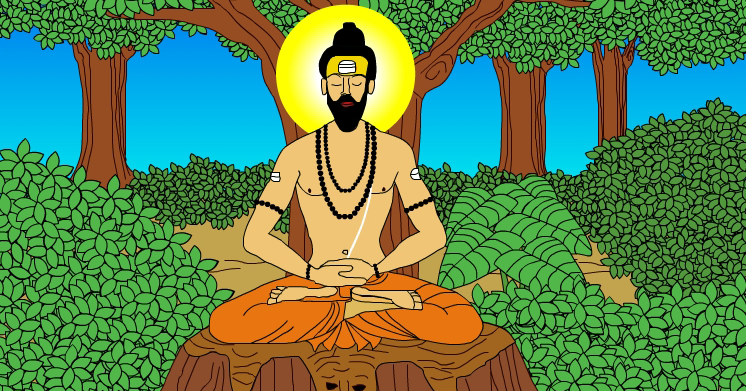
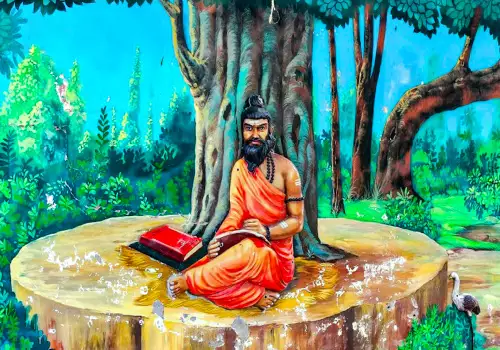
Around 2,500 years ago (700 - 300 BCE), at a time when Plato was doing philosophy, and Buddha was meditating and teaching a way out of suffering — there was a group of ancient Indian philosophers and mystics known as the forest-dwelling seers (vana-rish), the long-haired ascetics (kesin), or the silent ones (muni) — who forever changed the face of religion.
They lived at a time where, for centuries, the people of India had worshiped gods of natural forces. Agni, the god of fire. Surya, the sun god. Indra, the king of the gods, and the god of thunder, rain, and war. In total, they worshipped a whopping 33 major deities! Because of this, ancient poets had created prayers, songs of praise (hymns), and myths for these gods, while ancient priests crafted elaborate ritualistic offerings to them.
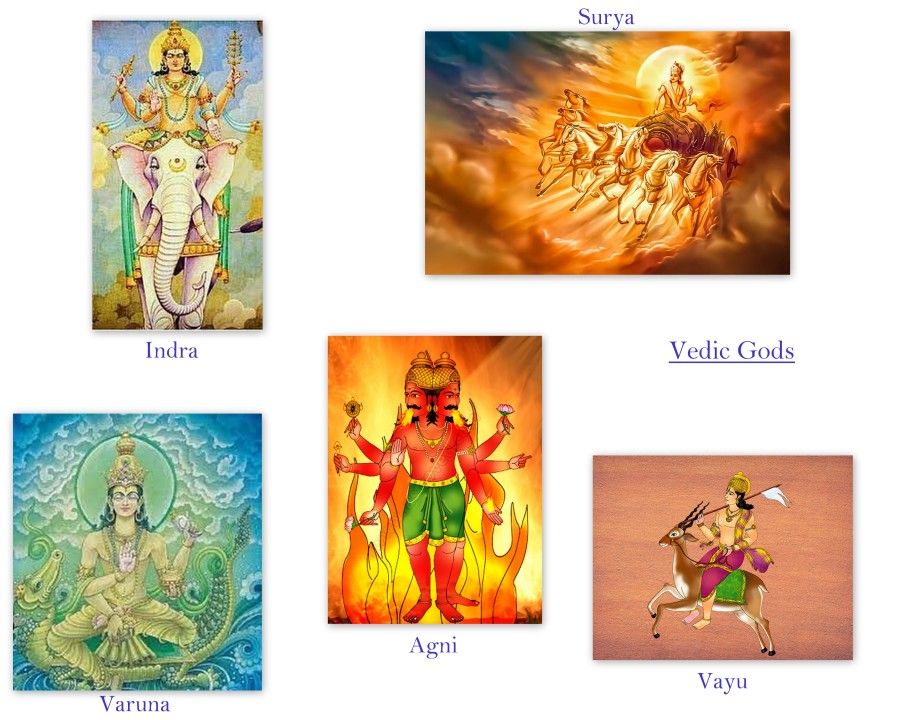
A representation of some of the anciet Vedic gods.
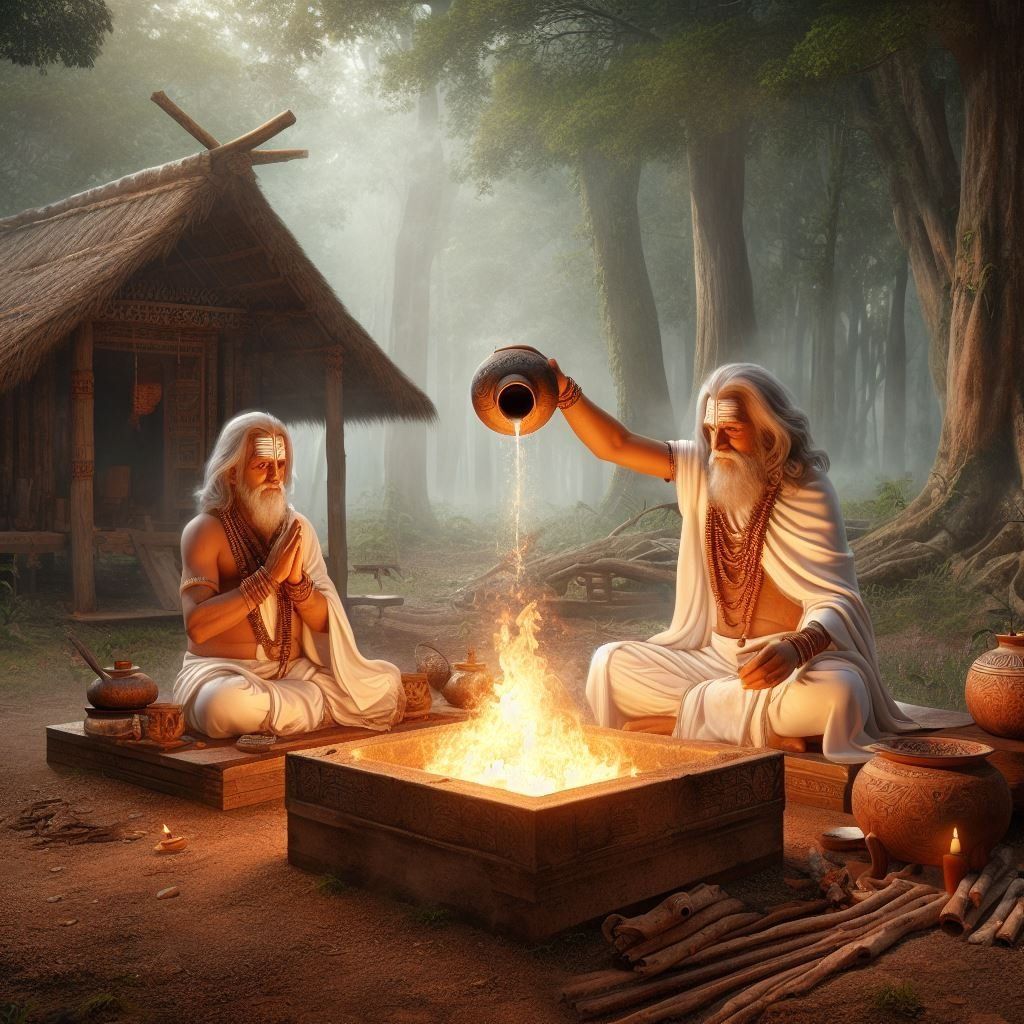
A representation of an ancient Vedic ritual, to Agni, the fire god, by two Vedic priests.
But, the ancient Indian philosophers and mystics wanted none of that. Instead, they did 3 things that changed not just their religion, but spirituality in general — forever.
Table of Contents:


 From Nature Polytheism, to Mystical Monotheistic Panentheism — From Many Nature Gods, to One God as the Ultimate Reality, Which is the Universe, But Also Transcends It
First, they distanced themselves from the nature gods. Instead, they preached about Brahman—an ultimate, singular, abstract, divine reality, behind everything. All the phenomena of the universe, and therefore the gods that represented them, were seen as expressions of this one divine reality. Which was formless (”nirakara”), infinite, perceived as bright light, and made of pure consciousness, being, and bliss (”sat-cit-ananda”). Paradoxically, it had no form, yet was all forms — and while it was the world, it also transcended it!
A representation of Brahman — very abstract, formless, with qualities of existence-consciousness-bliss, and interpreted more as “ultimate reality” than as a “deity.”

“‘I am that Brahman who is absolute bliss and pure consciousness’.” – Paramahasma Upanishad (Chapter 4, 55.) (Olivelle, 1992, p. 139.)
“There is nothing superior to him, nothing different from him, nothing subtler or greater than he. Alone he stands, changeless, self-luminous; he, the Great One, fills this universe. Though he fills the universe, he transcends it. He is un-touched by its sorrow. He has no form. Those who know him become immortal.” — Svetasvatara Upanishad (500-400 BCE)
“All this is He—what has been and what shall be. He is the Lord of immortality. Though He has become all this, in reality He is not all this. For truly, He is beyond the world. The whole series of universes—past, present, and future—express His glory and power; but He transcends His own glory. All beings of the universe form, as it were, only a portion of His being; the greater part is invisible and unchangeable. He who is beyond all predicates appears as the relative universe; He appears as all sentient and insentient beings.” — Rig Veda (10.90.1-5.) (Prabhavananda, 1963. p. 32.) (1500-1000 BCE)
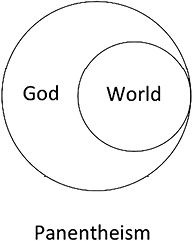
This radical shift in religious views, from nature polytheism (many nature gods) to a kind of mystical, monotheistic panentheism (one mystical god that is the universe & trancends it), can be seen in some of the “great sayings” (mahavakyas) of the Upanishads, the texts later written by these ancient mystics.
•
“Consciousness is Brahman.” (prajñānam brahma)
•
“All this is indeed Brahman.” (sarvam khalvidam brahma)
But these monotheistic musings on the ultimate nature of Brahman, also led them beyond religion altogether, and toward the beginnings of philosophy.
 From Religion to Philosophy — Speculating on the Nature of Reality, the Self, and Consciousness
Secondly, despite preceding the first Greek philosophers by at least 100 years, they were some of the first philosophers — moving away from worshipping nature deities and performing ritual offerings, and devoting themselves to deep speculations on the ultimate nature of reality, consciousness, and the self.
Perhaps the first ever philosophers of mind and theoretical psychologists, they studied what consciousness was, from its fundamental nature, to its different states. In fact, they created the very first map of different states of consciousness — including waking, dreaming, deep sleep, and “the fourth” (”turiya”), classified as the state of union of the soul with the ultimate reality.
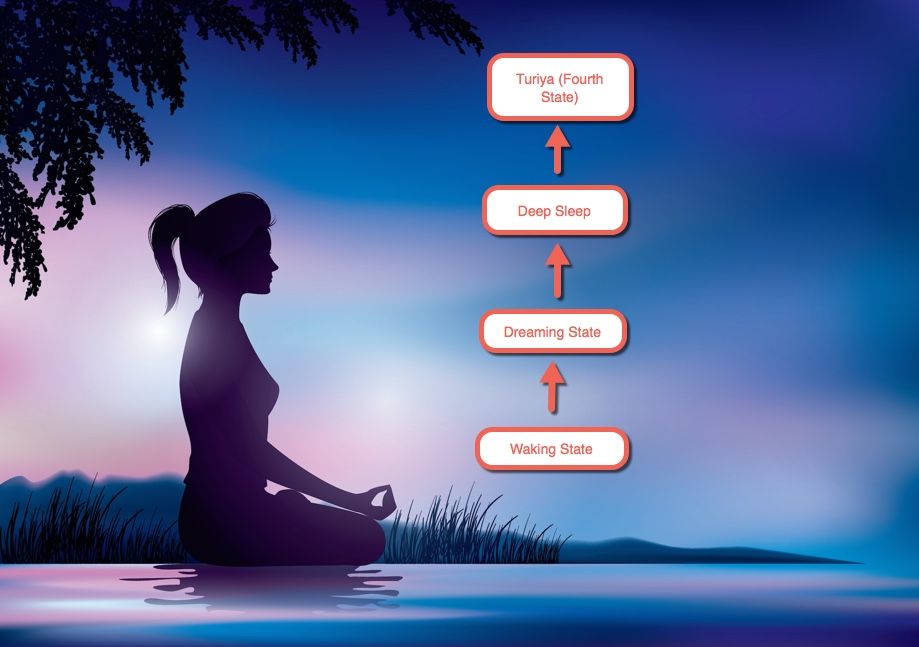
“An embodied soul embraces the following states: waking, dreaming, deep sleep, and the fourth.” – Nāradaparivrājaka Upanishad (Chapter 5, 171.) (1200 CE) (Olivelle, 1992, p. 194.)
They also represented these states with the mystic syllable “OM” (A-U-M-silence). “A” was the waking state, “U” the dream state, “M” the deep-sleep state, and the silence that precedes the three sounds was the fourth state. Which is quite insightful, as silence is what exists between all sounds, before all sounds, and comes after all sounds. They also used “OM” as a mantra, repeating the sound internally in meditation, in order to reach the state of no-sound.
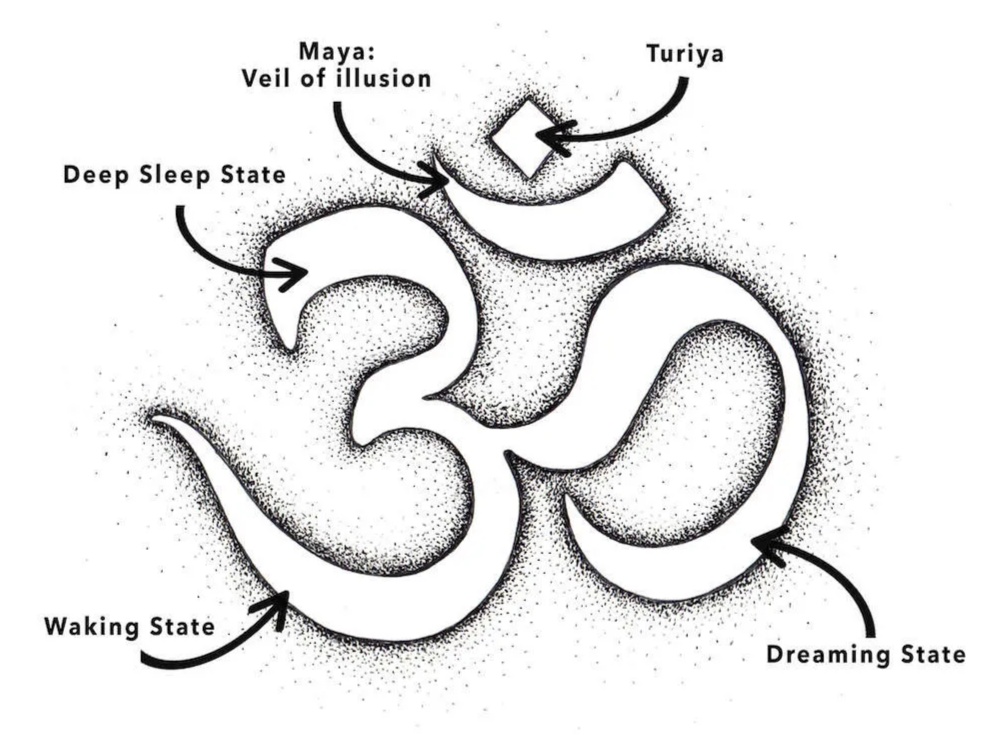
The four states of consciousness represented by the syllable OM, as explained in the Mundakya Upanishad.
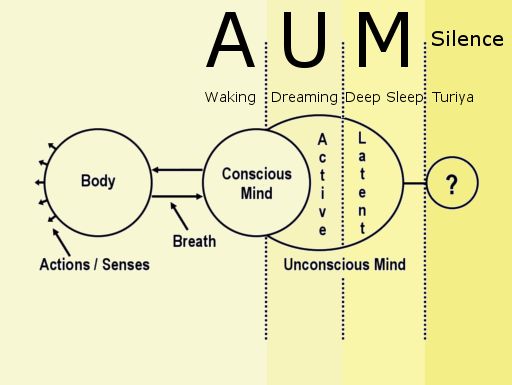
The four states of consciousness diagram. The sounds or each state from “OM” (A-U-M): “A” (waking) “U” (dream) “M” (sleep) and silence (the fourth). Where each exists: “conscious mind” (waking) “unconscious mind” (dream & sleep), and an unknown place (the fourth state).
The fourth state itself is quite peculiar. It was considered as beyond the reach of the orindary senses and thoughts — as the material world dropping away or dissolving into it — and being left only with Brahman, the ultimate reality, a formless, infinite, bright light, experienced as being-consciousness-bliss.
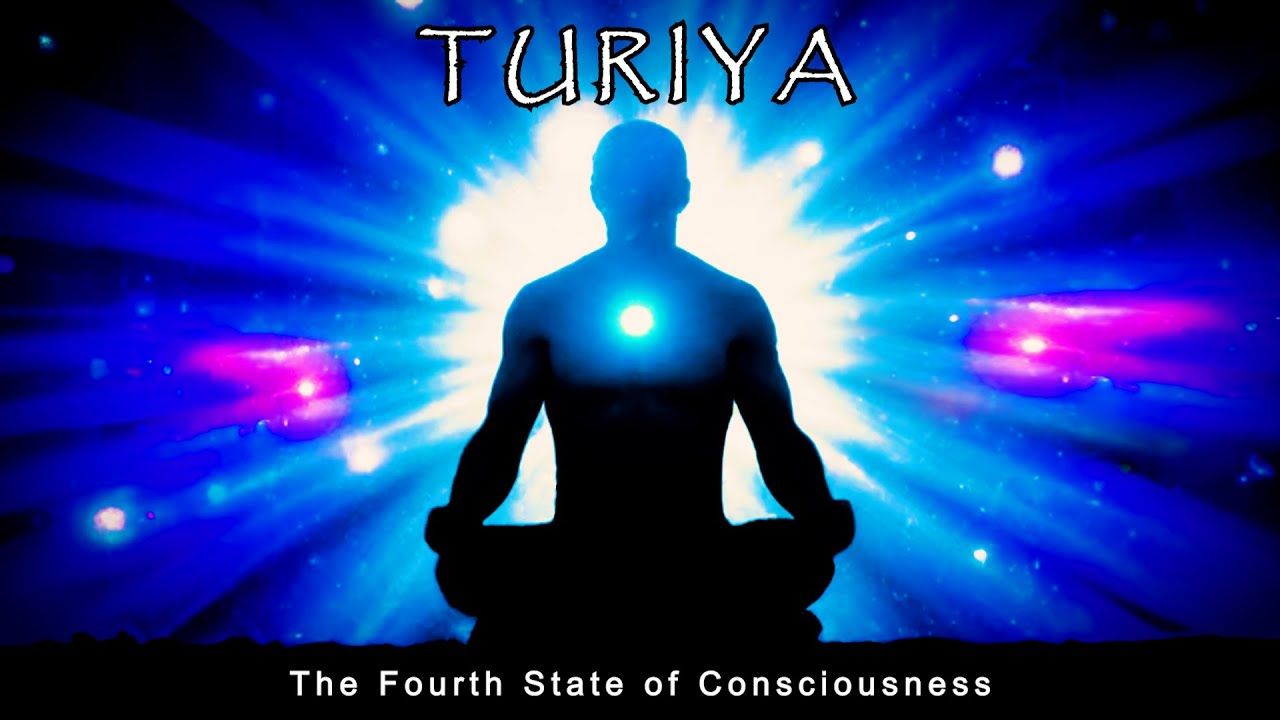
“The Fourth, on the other hand, is without constituent phonemes; beyond the reach of ordinary transaction; the cessation of the visible world; auspicious; and unique.” – Mandukya Upanisad 11 (Olivelle, 1996. p. 477.)
“When a wise man has withdrawn his mind from all things without, and when his spirit has peacefully left all inner sensations . . Let the spirit of life surrender itself into what is called turya, the fourth condition of consciousness. For it has been said (cites Mandukya Upanishad 7): There is something beyond our mind, which abides in silence within our mind. It is the supreme mystery beyond thought. Let one’s mind and subtle spirit rest upon that and nothing else.” – Maitri Upanishad 6.19 (Mascaro, 1965, p. 102.) (400-200 BCE)
“Into it the world dissolves; it is benign, tranquil, and non-dual — thus do they conceive of the fourth. That is the Brahman-OM. It should be understood. Nothing else is the fourth. Like the sun, it is everywhere the support of those who seek liberation. It is self-luminous. It has the form of Brahman. It shines always, for it is the supreme Brahman. That is the secret teaching.” – Nāradaparivrājaka Upanishad (Chapter 8, 213.) (Olivelle, 1992, p. 220.) (1150 CE)
They also theorized that the fundamental nature of consciousness was called the witness (sākṣī), or the observer (cetā) — a pure, observing awareness, which experiences seeing, hearing, smelling, touching, and tasting — but is none of them. In short, it was devoid of qualities, so that it could experience all of them. And that, in fact, there was only a one observing awareness behind all conscious minds, which that was none other than God (”Brahman”) , manifesting as the essential Self or Soul (”Atman”) of all conscious beings.
“The One God, hidden in all things. All-pervading, the Inner Soul of all things. The Overseer of deeds, in all things abiding. The witness, the sole observer, devoid of qualities.” — Svetasvatara Upanishad 6.11. (Hume, 1921. p. 410.) (500-400 BCE)
“’He sees, but he can't be seen; he hears, but he can't be heard; he thinks, but he can't be thought of; he perceives, but he can't be perceived. Besides him, there is no one who sees, no one who hears, no one who thinks, and no one who perceives. It is this self of yours who is the inner controller, the immortal. All besides this is grief.’ Thereupon, Uddalaka Aruni [the sage giving teaching] fell silent.” — Brihadaranyaka Upanishad 3.7.23. (700-600 BCE) (Ollieve, 1996, p. 89.)
This also means that they contemplated on the nature of the Self or Soul, and came to the conclusion that it was of the same nature as the ultimate reality, or Brahman. This is seen in some of the “great sayings” (mahavakyas) of the Upanishads, the texts later written by these ancient mystics.
•
“This Self is Brahman.” (ayam atma barhman)
•
“I am Brahman.” (aham barhmasmi)
•
“You are that.” (tat vam asi)
By identifying the ultimate reality of Brahman to consciousness, they also explored philosophical questions formulated only thousands of years later — like the mind-body problem and the hard problem of consciousness — both exploring the relationship between mind and matter, and whether or not mind is tied to the ultimate nature of reality. On this question, they took the stance of idealism, that the fundamental nature of reality, is consciousness.
“The universe is but a thought in [Absolute] Consciousness.” — Aṣṭāvakra Gītā 18.4. (500 BCE or 1400 CE) (Marshall, 2005.)
But, in order to truly know and describe this ultimate reality of Brahman consciousness, they didn’t just speculate about it with armchair philosophy. Like any mystic, and genuine empiricists, they also tried to directly experience it themselves — through expanded states of consciousness in meditation.
 From Traditional Religion to Mysticism — Against Rituals, Offerings, & Prayers — Preaching Mystical Union with the Ultimate Reality Through Meditation
Third and finally, the Indian mystics rebelled against the practices of the ancient religious priests — with their mumbo jumbo of rituals, offerings, prayers, and songs to the nature gods. As one of the mystical Upanishads bluntly put it, with not an ounce of shame:
“Deeming sacrifices and gifts as the best, the imbeciles know nothing better.” — Mundaka Upanishad 1.2.10. (Olivelle, 1996, p. 441.) (800-400 BCE)
Instead they taught that because God or the ultimate reality (”brahman”), was the essence of one’s very soul (”atman”) — one must go within in order to know it. So, these mystics renounced the world, retreated into the forest, and spent their days silently meditating. All in hopes of transcending their mind and the world, and reaching the very core of their being — where one attains the state of union of the soul (”atman”) with the ultimate reality (”brahman”).
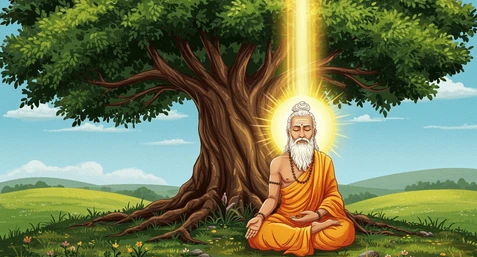
“It lies within the body, brilliant and full of light . . It is large, heavenly, of inconceivable form . . It is farther than the farthest, yet it is here at hand; It is right here within those who see, hidden within the cave of their heart. Not by sight, not by speech, nor by any other sense; nor by austerities or rituals is he grasped. Rather the partless one is seen by a man, as he meditates, when his being has become pure.” — Mundaka Upanishad 3.2.5-8. (800-400 BCE) (Olivelle, 1996, p. 451.)
So, to the Indian mystics, the divine could not be known by reading about, talking about it, or even praying to it — but rather, by literally becoming it. As Eliot Deutsch, scholar of Eastern philosophies put it, for the Indian mystic “to know” brahman is “to be” brahman. The scholar Robert Forman once called this, the path of mystical “knowledge by identity,” where the knower and known are one — there is no seperation. The Upanishads put it like this:
“When a man comes to know that highest brahman, he himself becomes that very brahman.” — Mundaka Upanishad (3.2.9.) (800-400 BCE) (Olivelle, 1996, p. 453.)
But exactly how did the Indian mystics achieve this mystical union? Surely it isn’t as simple as closing your eyes and breathing. There’s gotta be some more complex techniques involved not only in meditation, but prequisites outside of it which allow you to fully immerse yourself in silent contemplation. Well, according to them, there is, and it is to these techniques to which we now turn.